Climate Tech Launchpad Program

Empowering Student Innovators to Build Climate Solutions

A Sustainability Garage initiative by Mercedes-Benz Research and Development India, in partnership with T-Hub

Up to 50K grant per team | Mentorship from MBRDI Team and Industry Experts  | Prototyping Workshop and Market Lab Access

PROGRAM INTRODUCTION

Transform Ideas into Climate Tech Prototypes

The Climate Tech Launchpad program is a joint initiative by Mercedes-Benz Researchand Development India (MBRDI) and T-Hub, designed to empower student innovators focused on solving the world's most pressing climate and mobility challenges.

We aim to harness bold new ideas to address critical challenges in the battle against climate change. Through a rigorous 12-week acceleration program with mentorship, prototyping workshops, maker lab access, and innovation grants, the Launchpad equips the next generation to lead the charge in building impactful technologies for a greener future.

Apply Now

What You Get:

Real problem statements: Released by Dhruva Space each cohort, drawn from real industry needs.
Infrastructure from day 0: Dhruva Space's labs, testing environments, and supply chain.
Hands-on venture building: Active co-building with T-Hub, from idea to incorporated company.
Pilot pathways: Validated ventures can pilot with Dhruva Space or other partners.
Your first raise, supported: Grant and investor introductions through T-Hub's 200+ investor network. Dhruva Space may also invest directly, on mutually agreed terms.
100% of the company: No equity for participating. The IP is yours. Equity changes hands only if a partner invests money in you — on mutually agreed terms.

Driving Transformative Impact

In Season 1, the Climate Tech Launchpad brought together student innovators to build solutions for a more sustainable future. Here's the impactwe created together.

6 Colleges
Engaged via Bootcamps (ideation, solution)

560+
Students Reached

11 Teams
Teams Incubated

Up-To 30K
Prototype Grant

15+
Sector experts

MBRDI Mentorship
Technical sector expertise
Building on this foundation, Season 2 expands to Karnataka and Maharashtra, adds more cities and colleges, and sharpens the focus on taking ideas all the way to working prototypes.

How The Program Works

Our Climate Tech Initiatives (Season 1 homepage phrasing)

12 in-person bootcamps across top engineering colleges in Bangalore and Pune. Each bootcamp is an intensive 6-hour session covering climate tech fundamentals, design thinking, problem identification, and ideation. Open to all students; no prior startup or technical experience needed.
An intensive build-heavy program designed to take your idea from concept to a working prototype. Selected teams receive structured mentorship, prototyping workshops, maker lab access, innovation grants, and weekly check-ins- everything you need to turn a climate tech idea into something real.
How are teams selected? Through a combined process of bootcamp submissions and an open Call for Applications, we will shortlist and select a cohort of 18–20 student teams for the Climate Tech Launchpad Program.

Who Can Join?

To be eligible for the Launchpad program, applicants must meet the following requirements:
Development Stage: Participants should be at theearly stages of idea development and ready to progress from concept to working prototype during the program.
Sector Focus: The proposed idea must address one of the four Climate Tech sub-themes defined by the program  Road Safety & Mobility, Electric & Low-Carbon Mobility, Circular Economy & Sustainable Materials, or Climate Intelligence & Energy Resilience.
Academic Background: Applicants must be students currently enrolled in engineering, environmental science, design, business, or related disciplines at colleges in Bangalore or Pune. We strongly encourage cross-disciplinary teams to apply.
Innovation Potential: The idea should offer a unique, practical approach to solving a climate-related problem, with clear potential for development into a functional prototype.
Commitment: Participants must be fully committed to engaging in all aspects of the program, including mentorship sessions, workshops, maker lab build days, weekly check-ins, and Demo Day.

Infrastructure

Focus Areas- Climate Tech Sub-Themes

The program focuses on four critical areas of climate technology, each addressing urgent challenges in sustainability, mobility, and environmental resilience.
Road Safety & Human-Centric Mobility
Advancing safer mobility systemsthrough behaviour change, technology, and intelligent transport solutions.
• Road Safety Intelligence & Analytics
• Smart Infrastructure for Safety
• Behaviour Change & Awareness
• Emergency Response & Trauma
Electric & Low-Carbon Mobility
Accelerating the transition to clean mobility through electrification, energy efficiency, and next-generation EV ecosystems.
• EV Charging & Energy Infrastructure
• Battery Systems & Energy Storage
• Charging Grid & Energy Integration
• EVEfficiency
Circular Economy & Sustainable Materials
Enabling resource efficiency through reuse, recycling, and sustainable material innovation across mobility and industrial systems.
• Battery Circularity & Recycling
• E-Waste & Electronic Circularity
• Sustainable & Bio-Based Materials
•Automotive Circular Systems
Climate Intelligence & Energy Resilience
Leveraging data, AI, and clean energy innovation to build climate-resilient, efficient, and intelligent urban systems.
• Urban Climate & EnvironmentalIntelligence
• Data Center Optimization
• Nature-Based Solutions &Resilience Tech
• Green Energy & Grid Optimization
Note: Access is scoped to each venture's stage and technical needs — not a blanket guarantee of every facility listed.

THE PROBLEM - COHORT 1 FOCUS

Real problems. Many ways to solve them.

Dhruva Space releases a set of problem statements each cohort. Choose one:
Solar cells
In-orbit servicing & life extension
Star trackers
Payloads for satcom
Deep space systems
In-orbit manufacturing
End-user terminals for LEO communications
Outer space mining
Our thesis: India's private space sector is becoming a platform. The missing pieces are the companies that solve the hard problems around it. This studio exists to find the teams that build them.
Bringing your own idea? Out-of-scope ideas are considered as rare exceptions — true moonshots, or exceptional teams. Every venture must have at least one application in space.

Apply Now

ABOUT THE PARTNERS

Built in Hyderabad, for India — with India's leading partners.

Flashpoint is T-Hub's venture studio initiative, built in Hyderabad, India. Unlike a startup accelerator or incubator, a venture studio starts from a validated market problem and builds companies around it. This agri-tech edition, anchored by Kheyti, focuses on farmer market access: B2B, B2C, and B2G startups that connect greenhouse farmers to buyers, supply chains, and institutional procurement.

BUILDER AND STARTUPS PARTNER

T-HUB
The world's largest home for startups: 3,300+ startups supported, a 200+ investor network. Brings founder sourcing, venture building, company formation, and investor and grant introductions. Takes no equity for studio participation.

ANCHOR PARTNER

DHRUVA
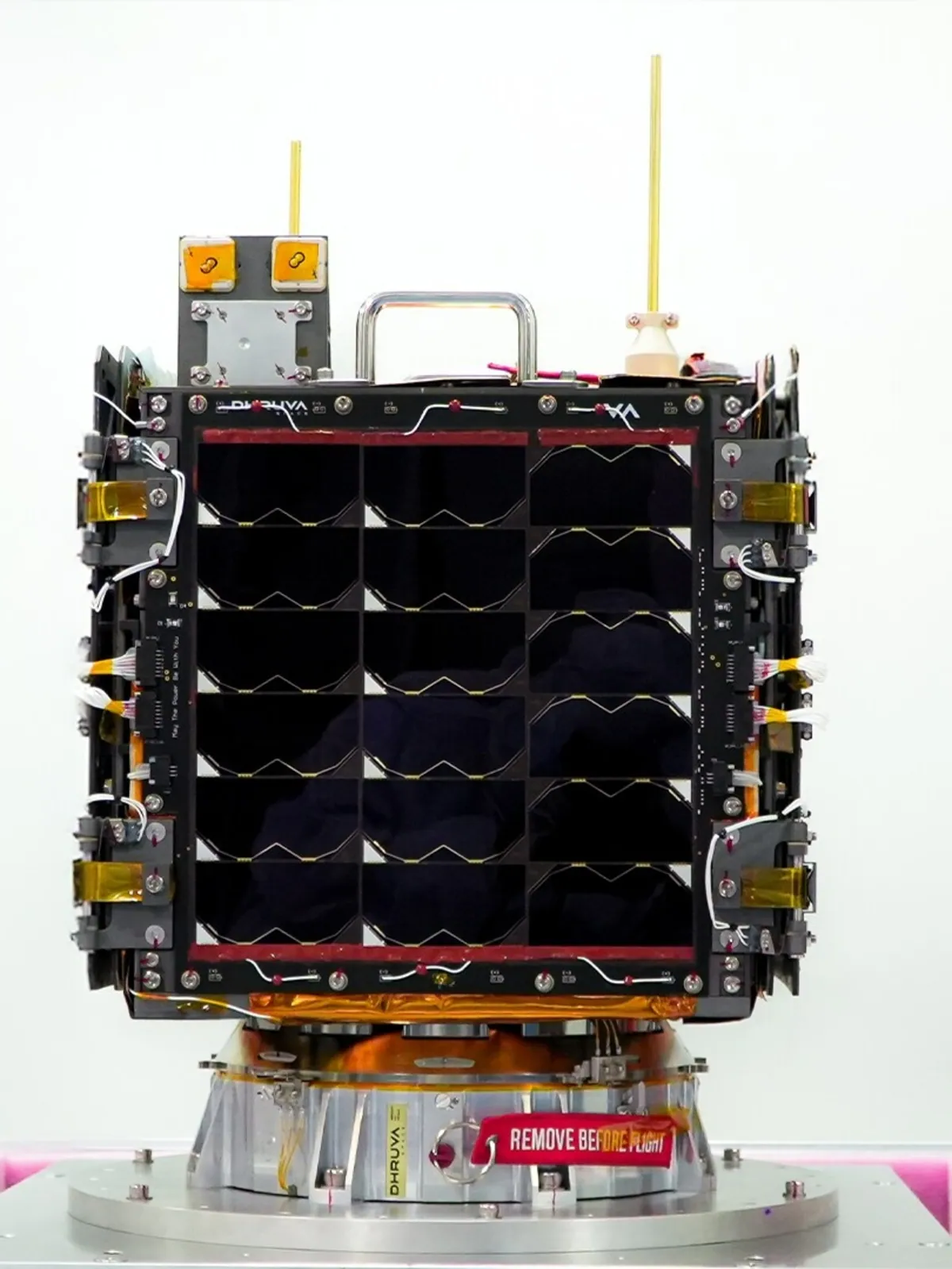
A Hyderabad-based full-stack space engineering company with systems in orbit. Brings the problem statements, engineering mentorship, aerospace-grade infrastructure and testbeds, supply-chain access, and pilot pathways.

Frequently Asked Questions

What is this studio?

Flashpoint is T-Hub's venture studio initiative. Unlike an accelerator or incubator, a venture studio starts from validated industry problems and builds companies around them. This space-tech edition, anchored by Dhruva Space, is built around the problem statements that matter most to India's private space industry.

Who's behind it?

Dhruva Space, the anchor partner, brings the problem statements, aerospace infrastructure, engineering mentorship, and pilot pathways. T-Hub, the builder and startups partner behind the world's largest home for startups, runs venture building, mentorship, and investor access.

Who can apply?

Founders and founding teams with an idea, and early-stage startups at TRL 3 or below, proposing solutions to the released problem statements. MSMEs and established companies are not eligible.

Do I need space experience?

No. But your venture must have at least one application in space — multi-use technologies that also serve other industries are welcome.

What problem statements will be available?

Dhruva Space releases a set of problem statements each cohort — critical, unsolved challenges drawn from real industry needs across the space stack.

Can I bring my own idea?

Ideas outside the problem statements are considered only as rare exceptions — true moonshots, or exceptional teams.

What support do I get?

Aerospace-grade infrastructure from day 0, hands-on venture building with T-Hub, engineering and domain mentorship from both partners, pilot pathways with Dhruva Space, company formation support, and your first raise supported through a 200+ investor network.

Will I receive funding?

Funding is not guaranteed as part of participation. Eligible ventures may be connected to grants, government schemes, investors, and VC funds through both partners' networks.

Do you take equity?

Not for participation — founders keep their cap table. If T-Hub or Dhruva Space invests money in your company, that investment takes equity on mutually agreed terms, like any investor, under a separate agreement.

Will Dhruva Space invest in my company?

Possibly — on terms mutually agreed with the startup, independent of T-Hub. Any such investment takes equity like any other. Never a condition or entitlement of participation.

Who owns the IP?

Your startup. Terms are agreed before development begins.

Am I locked to Dhruva Space?

No. Ventures remain free to scale beyond the Dhruva Space ecosystem.

Will Dhruva Space become my customer?

Where it fits, validated ventures may pilot or commercialise with Dhruva Space — subject to successful validation and separate commercial agreements. Procurement is never guaranteed.

Who pays for product development?

The studio provides access to both partners' existing resources and ecosystems. Costs beyond that are borne by the venture.

How large is the cohort?

5 teams to start, up to 10 max.

How long is the program?

Discover & validate (12–18 weeks, to TRL 3), then Build & pilot (18–50 weeks, TRL 3–6), then Scale. Timelines vary with the technology.

Is there an application fee?

No

How are participants selected?

Alignment with the problem statements, problem-solution fit, technical feasibility, team capability, market opportunity, and at least one application in space.

What happens after the studio?

You keep building independently — with continued support for pilots, fundraising, and ecosystem connections where it helps.

The problems exist. The infrastructure exists. The companies don't. Yet.
Cohort 1 · 5 teams to start, up to 10 · no equity for participation · no application fee

Apply Now

*Applications reviewed on a rolling basis.

Explore Corporate Partnerships With T-Hub

If you have any questions, fill the form and we will get back to you

Flashpoint by T-Hub · A space-tech venture studio, anchored by Dhruva Space · © 2026 T-Hub Foundation